Tree Pruning
Routine pruning to keep a tree healthy, safe and the right shape, from light maintenance to structural work on mature trees.
What pruning is for
Pruning is the routine maintenance of a tree: taking out what is dead, damaged, diseased or crossing, and shaping growth so the tree develops well. Done regularly and lightly it prevents the situations that later need heavy, expensive intervention.
What good pruning looks like
We work to BS3998, which in practice means:
- Cuts made just outside the branch collar, the swollen ring where the branch meets the stem. That collar contains the tree's own defence tissue and cutting through it opens the trunk to decay.
- No flush cuts against the trunk, and no stubs left projecting.
- Cutting back to a growth point that can take over, not to a blind stump.
- Removing no more live growth than the job actually needs.
Wounds are not painted or sealed. Sealants trap moisture against the wound and interfere with the tree's own compartmentalisation. This was standard advice decades ago and has been wrong for a long time.
When to prune what
Timing matters more than most people realise:
- Most broadleaves. Dormant season, late autumn to early spring.
- Birch, maple, walnut, hornbeam. These bleed heavily from late-winter cuts. Prune in late summer instead.
- Plum, cherry and other stone fruit. June to August only. Cutting them in winter invites silver leaf, which can kill the tree.
- Oak. Avoid the mid-season window where oak processionary moth is a concern.
- Evergreens. Generally late spring, once the risk of hard frost has passed.
The law on nesting birds
Under the Wildlife and Countryside Act 1981 it is an offence to damage or destroy an active nest. The main season runs 1 March to 31 August. We check every tree before starting work in that window, and if there is an active nest the job waits. Bats, which use cavities and loose bark, are protected all year.
Permissions
TPO or conservation area means consent first, even for pruning. Six weeks' notice for conservation-area work, up to eight weeks for a TPO decision. We do the paperwork.
What happens on the day
Access for the van and chipper, gates unlocked, cars moved. We sheet beds where there is a risk. Arisings are chipped and taken away unless you want the chip for mulch, which we are happy to leave.
How we quote
Free, on site, no obligation. Pruning is usually one of the cheaper operations, and doing it regularly is what stops a tree becoming a big job later.
Recent work
Tree Pruning we have carried out around Worthing and West Sussex.
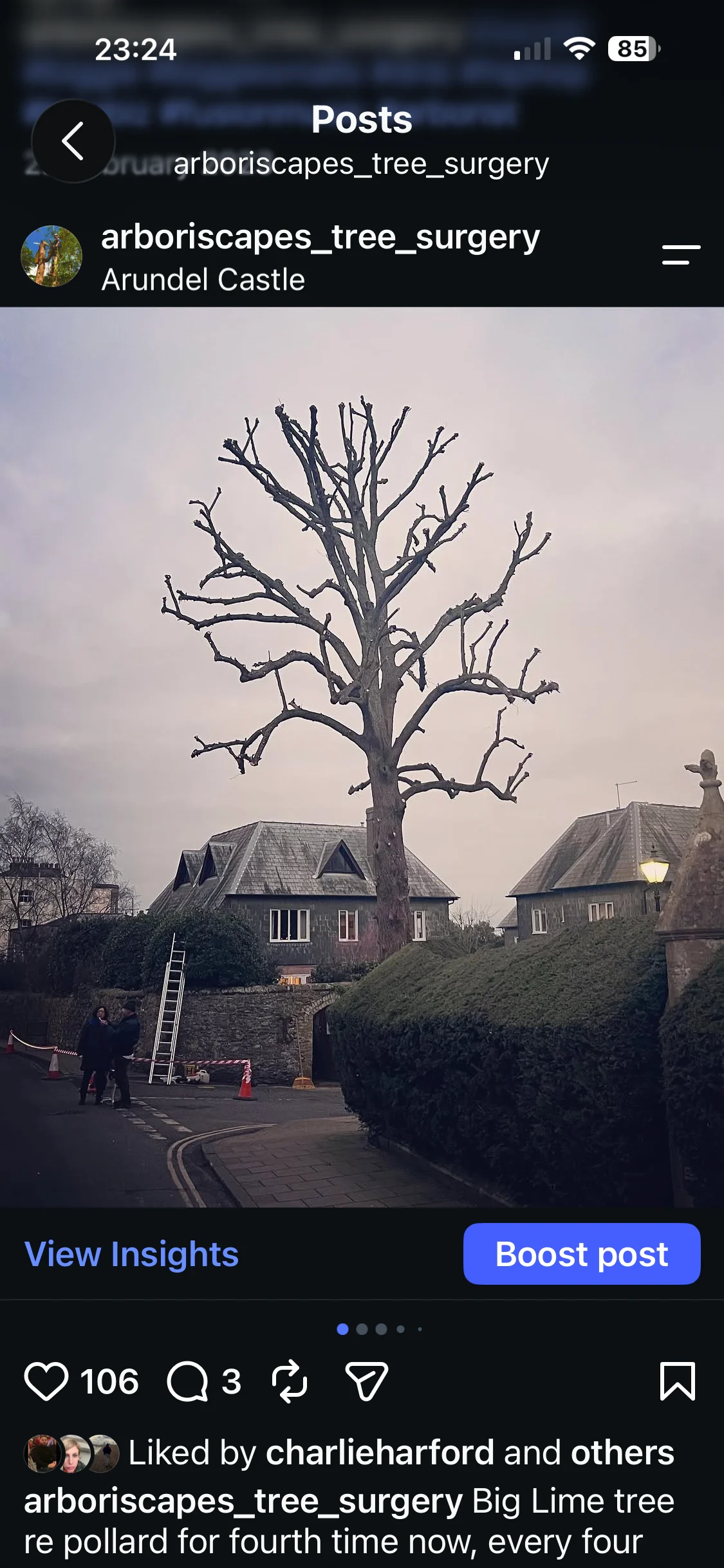
Before 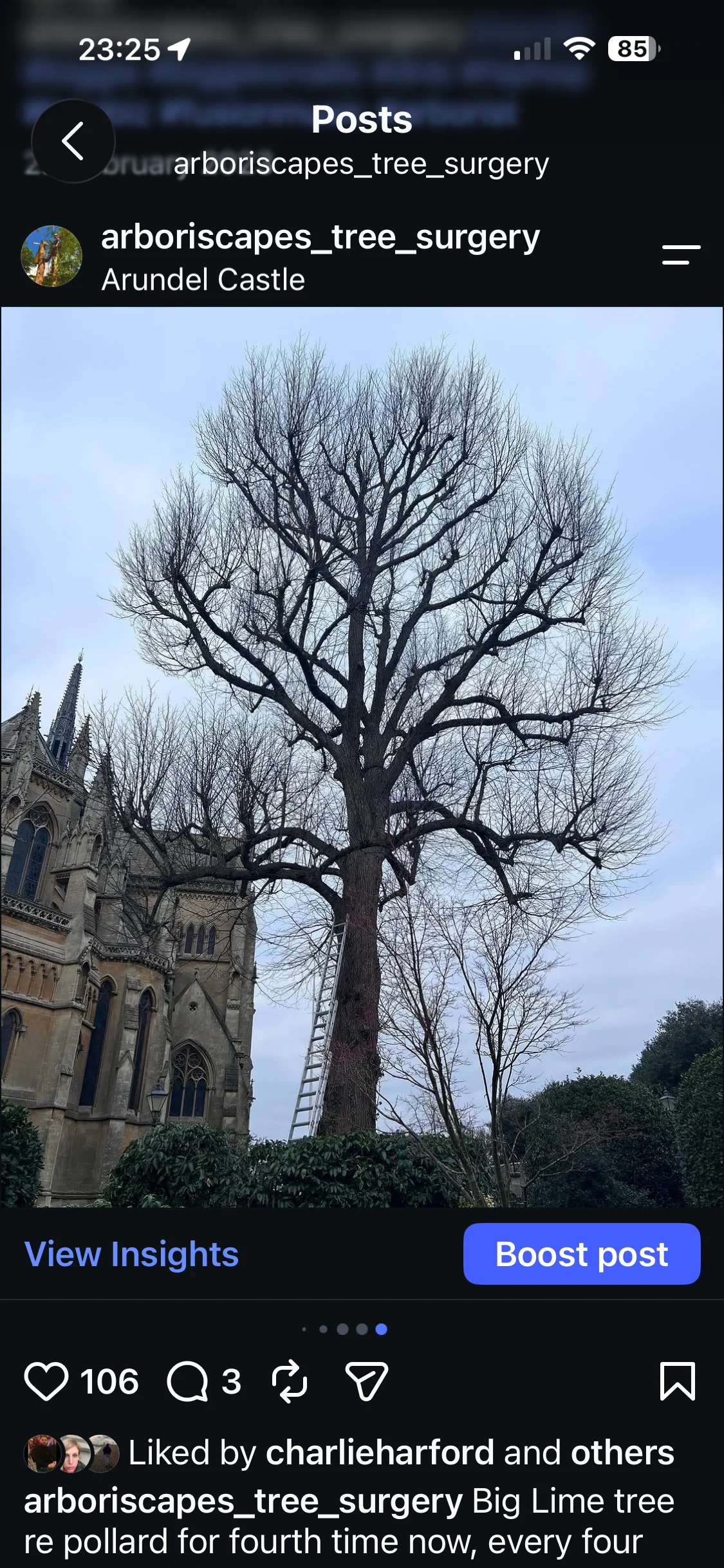
After Large Lime Tree Pruning, Arundel
Before and after pruning of a very large lime tree in Arundel, West Sussex. This tree is pruned every six years.
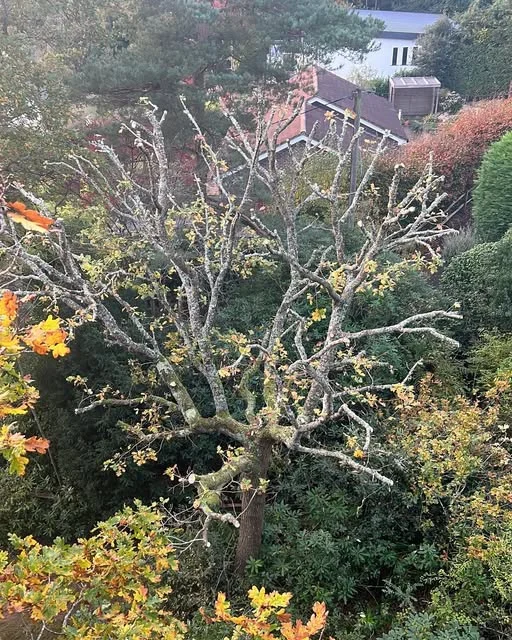
Winter Crown Work
Crown work on a still, misty morning. The bare season is when the structure of a tree is easiest to read.
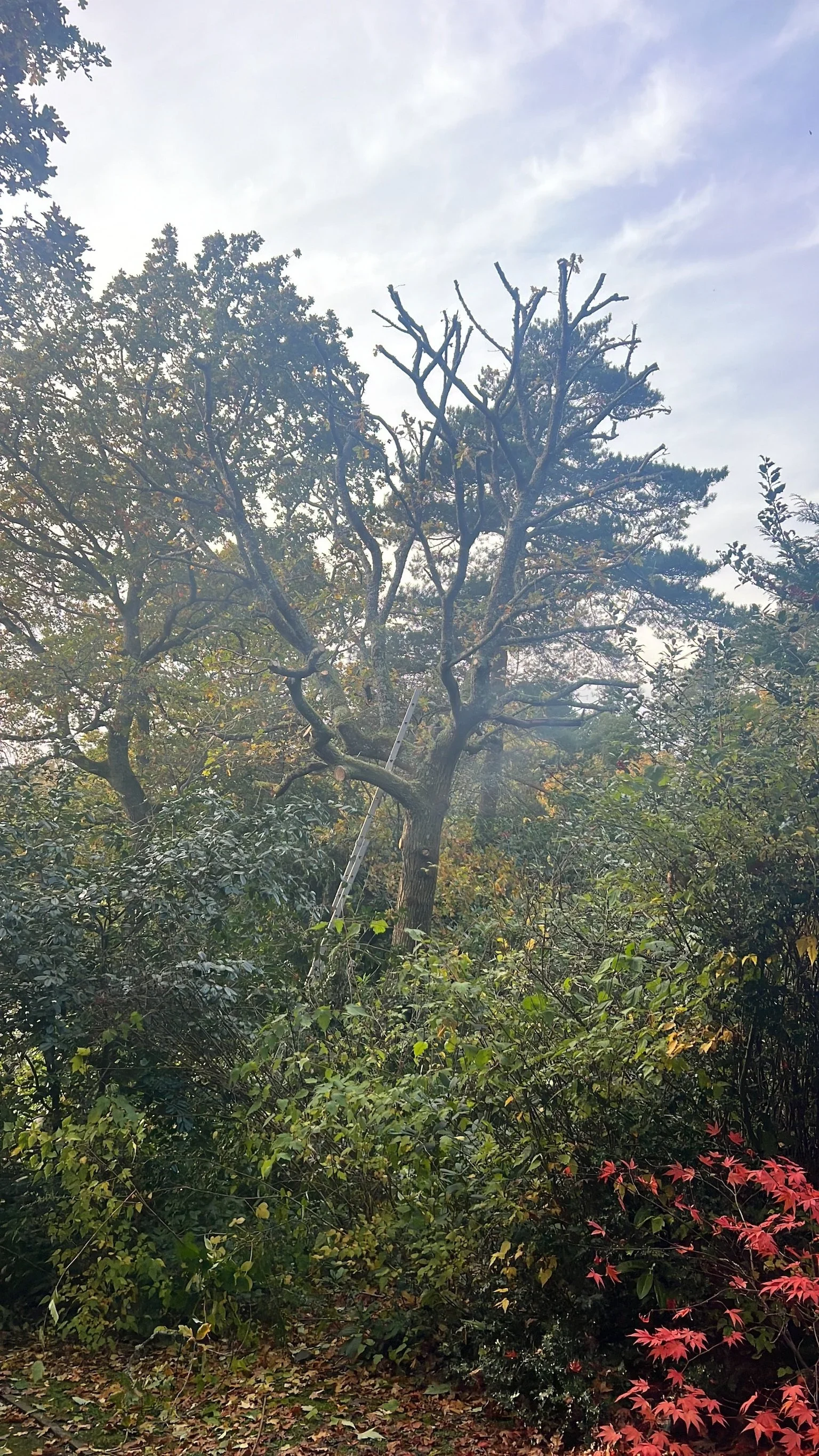
Misty Autumn Tree Work
Autumn tree work on a still, damp morning. Cooler months are the working season for most broadleaf pruning.
Common questions
What is BS3998 and why does it matter?
BS3998:2010 is the British Standard for tree work. It sets out how cuts should be made, how much can be removed and how operations should be specified. Work done to it is defensible; work that ignores it is where you get topping, flush cuts and stubs.
What month should my tree be pruned?
Most broadleaves in the dormant season, late autumn to early spring. Birch, maple, walnut and hornbeam in late summer because they bleed. Plum and cherry only June to August, to avoid silver leaf. We will advise for your particular species.
Should the cuts be painted or sealed?
No. Wound sealants trap moisture and interfere with the tree's own defences. It was common advice decades ago and has been known to be wrong for a long time. A properly placed cut seals itself.
Can pruning fix a leaning tree?
It can reduce the weight on the leaning side and take some load off, which sometimes helps. It cannot correct a lean caused by root failure or soil movement, that needs assessing properly, and may mean felling.
How often should a tree be pruned?
For most garden trees, every three to five years is plenty. Fruit trees and vigorous species like lime want more frequent attention. Regular light pruning is far cheaper over time than occasional heavy work.