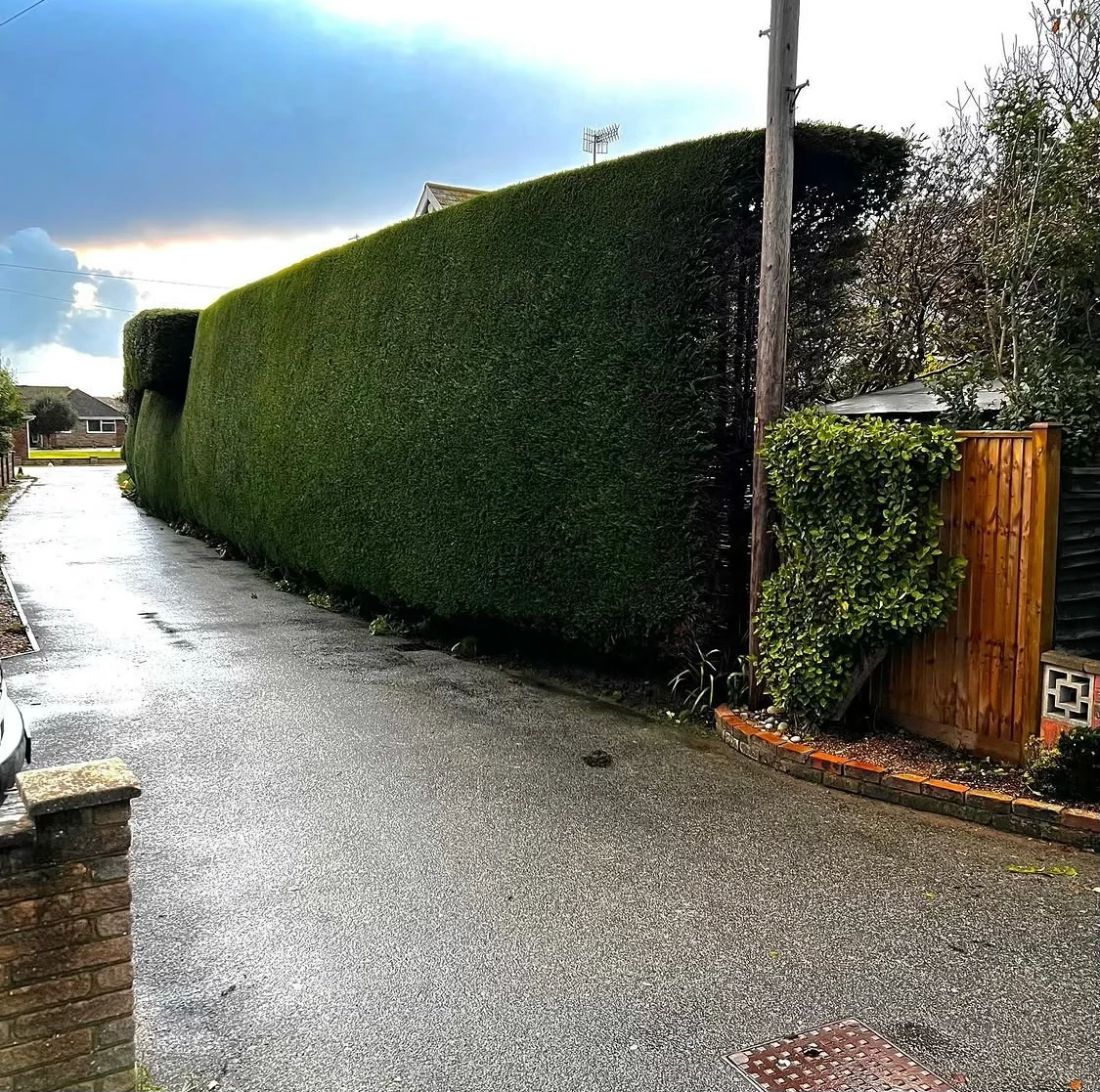
Hedge Cutting & Shaping
Cutting, shaping and reducing hedges of every kind, from a routine annual trim to reshaping an overgrown boundary or topiary work.
What we cut
Everything from a garden privet to a long conifer boundary: beech, hornbeam, yew, laurel, privet, box, escallonia, griselinia and the leylandii that half of Sussex planted in the 1990s. Formal shapes and topiary too.
When you can cut a hedge
This is the question we get asked most, and the answer has legal weight.
Hedges are prime nesting habitat, and under the Wildlife and Countryside Act 1981 it is an offence to damage or destroy an active nest. The main nesting season runs 1 March to 31 August.
That does not ban hedge cutting outright, but it does mean every hedge must be checked for active nests first, and the work stopped or deferred if one is found. We check before we start. If you can choose, late summer through winter is the straightforward window.
Timing by species
- Beech and hornbeam. One cut in late summer holds the shape and keeps the winter leaf.
- Yew. Tolerant and slow; one cut a year is plenty, two for a crisp formal face.
- Privet and laurel. Fast. Two or three cuts a season if you want it sharp.
- Box. Cut in dry weather and never in strong sun, and watch for box blight and box moth caterpillar, both now widespread.
- Leylandii and other conifers. See below.
The honest answer about leylandii
Leylandii, and most conifers, will not regenerate from brown wood. Cut back past the green foliage into bare stems and it stays bare permanently.
That means the sides of an overgrown conifer hedge can only be taken back to the edge of the live growth, not to where you might want the boundary to be. The top can be reduced as much as you like, it just will not green up on a cut face.
If a leylandii hedge has already outgrown its space in width, the realistic options are living with it, or taking it out and replanting. We would rather say that at the quote than leave you with a brown wall.
My neighbour's hedge blocks my light
There is a formal route. Under Part 8 of the Anti-Social Behaviour Act 2003, a complaint can be made to the council about an evergreen or semi-evergreen hedge over 2 metres that is affecting reasonable enjoyment of your property. Locally that is Adur & Worthing Councils or Arun District Council depending on where you are. The council charges a fee and it is a last resort, talking to the neighbour first almost always works better.
You may also cut back branches that overhang your boundary, to the boundary line. The cuttings legally remain the tree owner's property and should be offered back.
What happens on the day
Access, gates unlocked, cars moved, and pets in. We sheet borders where clippings will land. Everything is cleared, raked and taken away unless you would like the chip left.
How we quote
Free and on site. Hedge work is priced on length, height and how much is coming off, plus access, because a hedge we can back the chipper up to and a hedge at the bottom of a long narrow garden are different jobs.
Recent work
Hedge Cutting & Shaping we have carried out around Worthing and West Sussex.
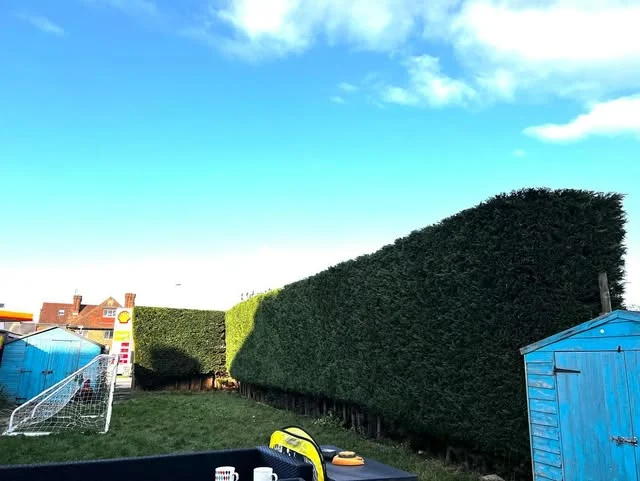
Tall Hedge, Cut Square
A tall hedge cut flat along the top with square faces, which is what holds the shape through the season.
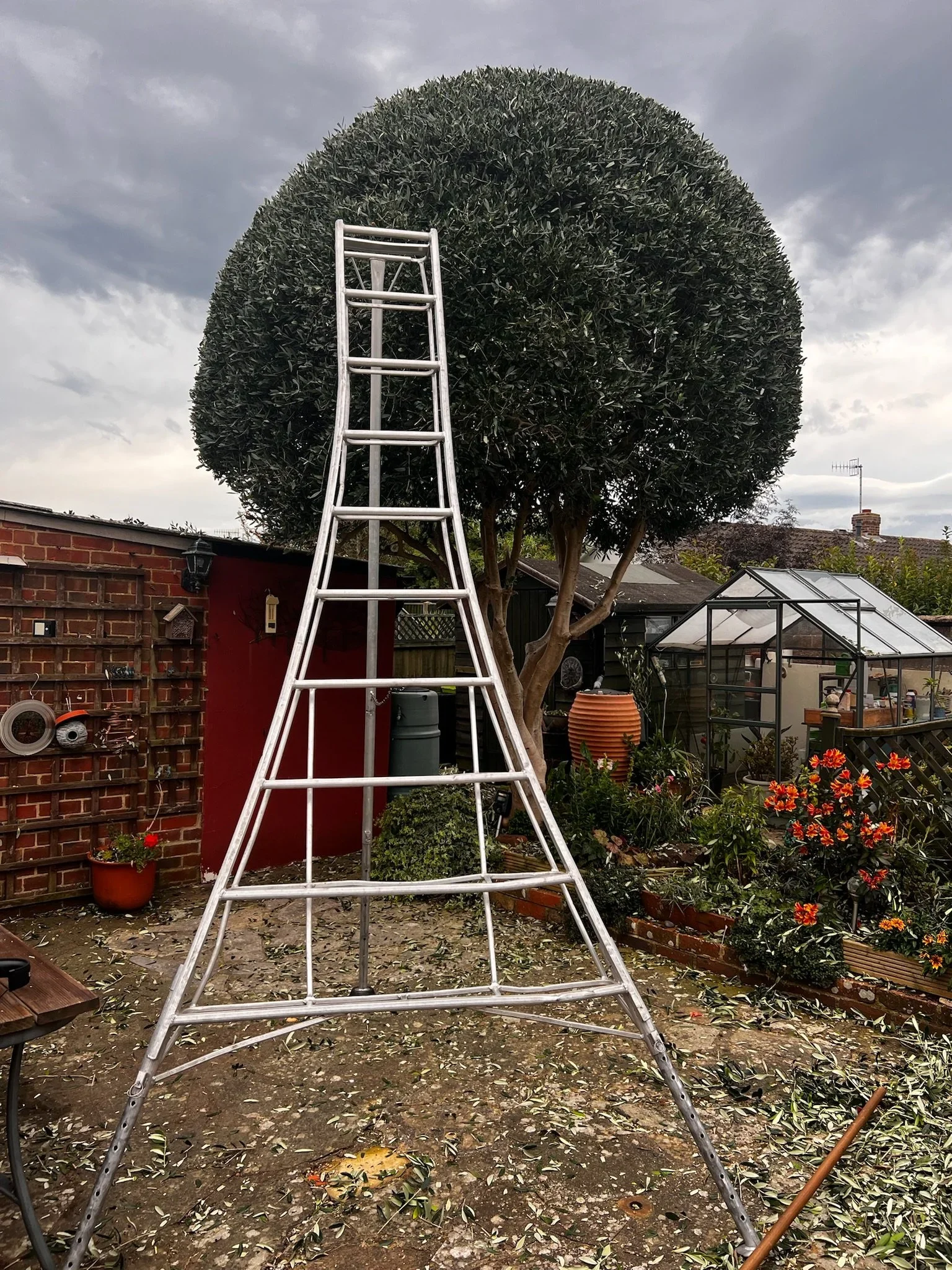
Topiary Ball, Work in Progress
Shaping a topiary ball from a tripod ladder, which stands on three legs and sits level on soft ground.
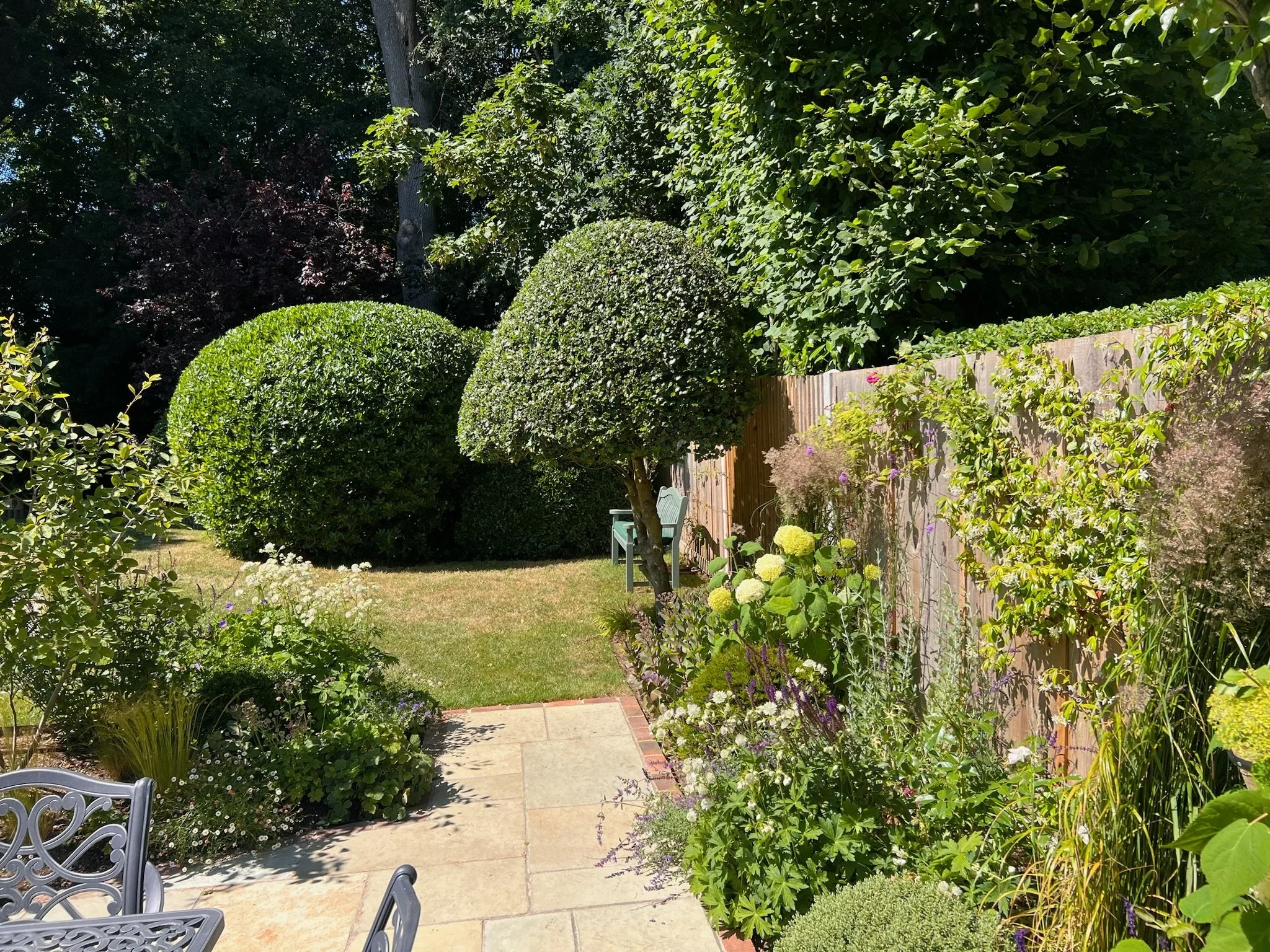
Topiary in a Walled Garden
Box ball topiary in a walled garden. Box is cut in dry weather and out of strong sun, and watched for blight and box moth.
Common questions
When can I cut my hedge?
Any time, provided there is no active bird nest, but the main nesting season is 1 March to 31 August and active nests are protected by law. We check every hedge before starting. Late summer through winter is the simplest window.
How often should a hedge be cut?
Beech, hornbeam and yew are happy with one cut a year. Privet, laurel and leylandii grow fast enough to want two or three if you like a sharp finish.
Can you reduce the height of a conifer hedge?
The height, yes, as much as you want. The sides only back to the live green growth. Leylandii and most conifers will not regenerate from brown wood, so a hard cut into bare stems stays bare permanently.
My neighbour's hedge blocks my light, what can I do?
Part 8 of the Anti-Social Behaviour Act 2003 covers evergreen hedges over 2 metres. You can complain to Adur & Worthing or Arun, who charge a fee for it. It is a last resort; a conversation usually gets there faster.
Can I cut branches that overhang my garden?
Yes, back to the boundary line. But the cuttings remain the owner's property in law and should be offered back rather than thrown over. And if the tree is protected by a TPO you still need consent first.
Do you take the clippings away?
Yes, chipped and removed as standard. If you would rather keep the chip for mulching beds we will leave it in a heap wherever suits.