Fruit Tree Pruning
Specialist pruning for apple, pear, plum and cherry trees, for a healthy framework, good airflow and a better crop.
Fruit trees are pruned differently
A fruit tree is pruned for a crop, not just for shape. That means opening the centre so light and air reach the fruiting wood, keeping the tree at a height you can actually pick from, and balancing growth against fruiting, a tree pruned too hard responds with vigorous shoots and no fruit.
Timing is the whole game
Getting the month wrong can cost the tree.
- Apples and pears. Prune in winter dormancy, roughly November to early March. Summer pruning is used on trained forms to control vigour.
- Plums, cherries, damsons, gages, anything in the _Prunus_ family. June to August only. Never in winter. Winter cuts on stone fruit are the main route in for silver leaf, a fungal disease that can kill the tree. This is the single most important thing on this page.
- Quince and medlar. Winter, like apples.
Restoring a neglected tree
Old, overgrown apple trees are common in Worthing gardens, and most can be brought back. The mistake is doing it in one go: a hard cut in a single winter produces a forest of vertical water shoots and no fruit.
The right approach is over three winters, taking a manageable amount each time, dead and crossing wood first, then height and congestion, then refining the framework. It takes longer and it works.
Why has my tree stopped fruiting?
Common causes, roughly in order:
- Too much congested growth, so light never reaches the fruiting spurs
- Over-pruning, which pushes the tree into growth rather than fruit
- A late frost catching the blossom, which is a real risk inland from the coast
- Biennial bearing, where a heavy year is followed by a bare one
- No compatible pollination partner nearby
We will tell you which of these it looks like when we see the tree.
Trained forms
Espaliers, fans and cordons need their own routine, usually a summer prune to hold the shape and a lighter winter tidy. Worth doing properly, a well-kept trained tree is productive out of very little space.
How we quote
Free and on site. Fruit work is usually quick, and a small amount done at the right time of year is worth far more than a lot done at the wrong one.
Recent work
Fruit Tree Pruning we have carried out around Worthing and West Sussex.
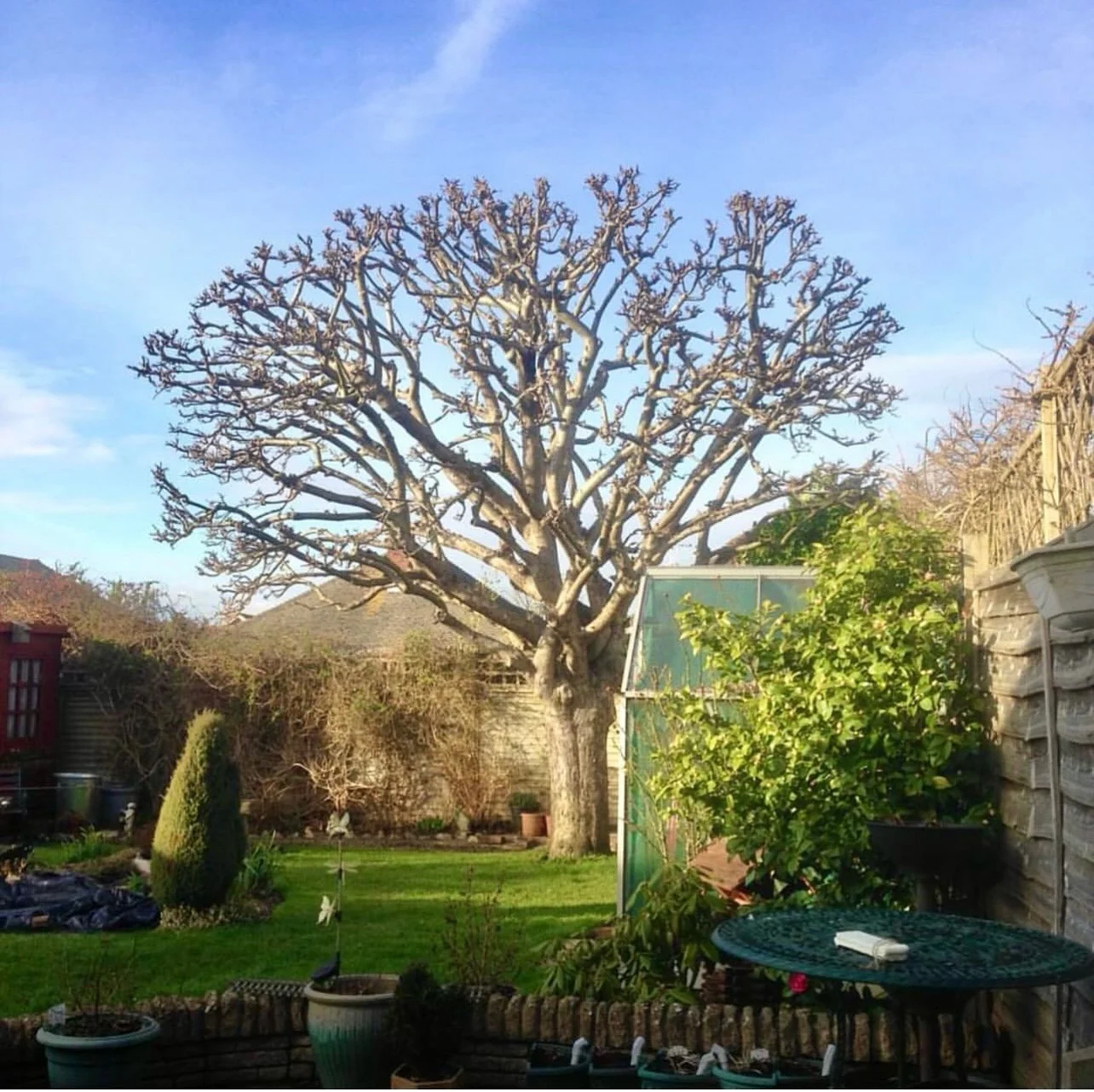
Mature Apple Tree Pruning, Goring
Annual pruning of a large, mature apple tree for a residential customer in Goring. The tree flowers and fruits well every year.
Common questions
When should I prune my apple tree?
In winter dormancy, roughly November to early March, while the tree is leafless and the framework is visible. Trained forms also get a summer prune to control vigour.
When should I prune plums and cherries?
June to August, and never in winter. Winter cuts on plums, cherries and other stone fruit are the main way silver leaf gets in, and silver leaf can kill the tree. This is the one timing rule worth remembering.
Can you restore a neglected old apple tree?
Usually, yes, but over three winters rather than one. Taking it all back in a single go produces a mass of vertical water shoots and no fruit. Staged restoration keeps the tree cropping while it is brought back.
Why has my tree stopped fruiting?
Most often congested growth shading the fruiting spurs, or over-pruning pushing it into leaf instead of fruit. Late frost on the blossom, biennial bearing and lack of a pollination partner are the other common causes.
Will pruning reduce this year's crop?
A little, since you are removing some fruiting wood. What remains ripens better for the extra light and air, and the tree crops more reliably in following years.